
Blog
Bone Remodeling Explained: How Your Body Builds and Maintains Strong Bones
Th9
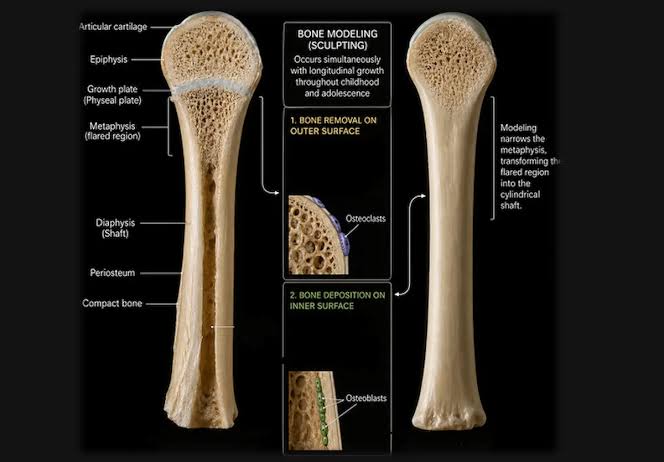
When people think about bones, they often imagine hard structures that remain unchanged throughout life. In reality, bones are living tissues. Your skeleton is constantly changing. Old bone tissue is broken down, new bone tissue is formed, and minerals such as calcium move in and out of bone according to the body’s needs.
This ongoing process is known as bone remodeling. Bone remodeling is essential for maintaining skeletal strength, repairing microscopic damage, regulating mineral balance, and adapting bones to physical activity.
It is also an important concept for understanding why calcium remains relevant throughout life—even after a person has stopped growing taller. During childhood and adolescence, the skeleton is rapidly developing. During adulthood, height generally remains stable, but bone tissue continues to be renewed and remodeled.
Understanding this process can help explain why nutrition, exercise, vitamin D, and lifestyle habits matter for long-term bone health.
What Is Bone Remodeling?
Bone remodeling is the continuous process through which old bone tissue is removed and replaced with new bone tissue.
Two major types of cells are involved:
Osteoclasts
Osteoclasts are specialized cells responsible for breaking down and resorbing old bone tissue.
Osteoblasts
Osteoblasts are cells that help form new bone tissue.
These two processes work together.
A simplified version looks like this:
Old bone → resorption → new bone formation → remodeled bone
This process does not stop when you become an adult.
Your skeleton continues remodeling throughout life.
Why Does the Body Remodel Bone?
There are several reasons.
1. Repairing microscopic damage
Everyday activities place mechanical stress on bones.
Walking, running, jumping, lifting, and even normal movement can create tiny areas of damage over time.
Bone remodeling helps repair these areas.
2. Maintaining bone strength
The skeleton adapts to mechanical demands.
Bones exposed to appropriate physical loading can respond by becoming stronger and more structurally capable.
3. Regulating minerals
Bone serves as a major reservoir for minerals, particularly calcium and phosphorus.
The body carefully regulates mineral levels because calcium is needed for many functions beyond the skeleton.
Read more: Does Basketball Make You Taller? The Truth About Basketball and Height
4. Replacing older tissue
Bone tissue does not remain permanently unchanged.
Remodeling allows older tissue to be replaced with new tissue.
Bone Remodeling Is Different From Bone Growth
This distinction is extremely important.
Bone growth
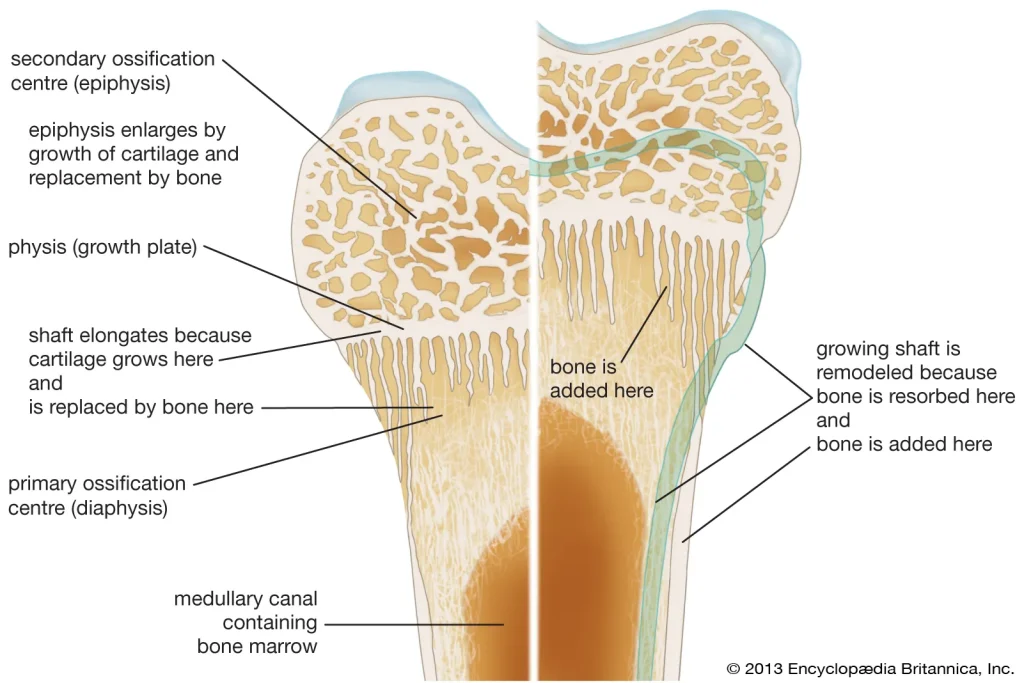
During childhood and adolescence, bones can increase in length through activity at the growth plates.
This process contributes to increases in height.
Bone remodeling
Remodeling occurs throughout life and involves the replacement and restructuring of existing bone tissue.
It does not normally make adult long bones longer.
Therefore:
Bone remodeling continues throughout adulthood, but normal linear height growth does not.
This explains why adults can continue improving bone health without becoming taller.
What Happens During Bone Remodeling?
Bone remodeling occurs in several stages.
Stage 1: Activation
The body identifies an area of bone that needs to be remodeled.
This may happen because of normal aging, mechanical stress, microscopic damage, or changes in mineral requirements.
Stage 2: Resorption
Osteoclasts break down and remove a small amount of old bone tissue.
Stage 3: Reversal
The remodeling site transitions from bone removal to bone formation.
Stage 4: Formation
Osteoblasts produce new bone tissue.
Stage 5: Mineralization
The newly formed bone gradually becomes mineralized and gains greater structural strength.
The process is carefully coordinated.
Healthy bones depend on an appropriate balance between breakdown and formation.
Bone Remodeling During Childhood
During childhood, the skeleton is undergoing both growth and remodeling.
The bones are:
- Increasing in length
- Increasing in size
- Becoming stronger
- Adapting to physical activity
- Accumulating bone mass
Nutrition is particularly important during this stage.
Adequate intake of nutrients such as calcium, protein, vitamin D, magnesium, phosphorus, and other essential nutrients supports normal skeletal development.
Physical activity also provides mechanical signals that influence the skeleton.
Bone Remodeling During Adolescence
Adolescence is one of the most important periods for skeletal development.
The body undergoes major hormonal changes, while bones continue to grow and accumulate mass.
During these years, lifestyle factors can have an important influence on overall skeletal health.
Helpful habits include:
- Eating a balanced diet
- Getting enough calcium
- Maintaining adequate vitamin D
- Consuming sufficient protein
- Participating in regular physical activity
- Getting enough sleep
- Avoiding smoking
This does not mean that one nutrient or exercise determines final height.
Instead, these habits help create favorable conditions for healthy development.
What Happens to Bone Remodeling in Adulthood?
Once growth plates have closed, the skeleton no longer grows longer in the same way.
However, remodeling continues.
Adult bone is constantly being renewed.
The balance between bone resorption and formation can change with:
- Age
- Hormones
- Nutrition
- Physical activity
- Medications
- Lifestyle
- Certain health conditions
Maintaining healthy habits becomes increasingly important as people age.
Peak Bone Mass and Why It Matters
During childhood and early adulthood, the skeleton builds up bone mass.
At some point, a person reaches what is commonly referred to as peak bone mass.
The amount of bone accumulated during these years can influence skeletal health later in life.
This is one reason adolescence and young adulthood are important periods for developing healthy habits.
Building a strong nutritional and physical foundation does not guarantee perfect bone health forever, but it contributes to a healthier skeletal starting point.
How Does Calcium Support Bone Remodeling?
Calcium is essential to bone structure and mineralization.
During remodeling, the body must maintain an appropriate supply of calcium.
If dietary calcium intake is consistently inadequate, the body has mechanisms that help maintain blood calcium levels.
This can involve increased reliance on calcium stored in bone.
This is one reason adequate calcium intake is important throughout life.
However, the goal should be adequate calcium, not excessive calcium.
Taking large amounts of calcium does not automatically make bones stronger.
The Role of Vitamin D
Calcium and vitamin D are closely connected.
Vitamin D helps the body absorb calcium from the digestive tract and supports normal calcium metabolism.
Without adequate vitamin D, maintaining healthy calcium balance can become more difficult.
Sources of vitamin D include:
- Sunlight
- Certain foods
- Fortified foods
- Supplements when appropriate
Individual vitamin D status can vary considerably.
People with concerns about deficiency may need professional evaluation.
What Role Does Protein Play?
Bone is not made entirely of minerals.
It also contains a protein-based organic framework.
Protein therefore contributes to the structural foundation of bone.
Adequate protein intake is also important for maintaining muscle.
This matters because muscles and bones work together.
Stronger muscles can help a person move effectively and participate in physical activity that places appropriate loads on the skeleton.
A balanced diet should therefore provide enough protein as well as calcium and other nutrients.
Why Exercise Matters for Bone Remodeling
Bones respond to mechanical loading.
When you walk, run, jump, or perform resistance exercises, your skeleton experiences forces that provide signals for adaptation.
Weight-bearing and resistance activities can therefore support bone health.
Examples include:
- Walking
- Running
- Dancing
- Hiking
- Jumping activities
- Resistance training
- Sports
The appropriate activity depends on age, fitness level, and health status.
The objective is not to overload the skeleton.
Consistent, appropriate physical activity is more useful than extreme training.
Does Exercise Make Bones Longer?
Not in adults with closed growth plates.
Exercise can influence bone strength and structure, but this is different from increasing the length of adult long bones.
For children and teenagers, physical activity supports healthy development, but no particular exercise guarantees additional height.
This distinction is important because advertisements sometimes confuse bone adaptation with height growth.
What Happens When Bone Breakdown Exceeds Formation?
Bone remodeling is healthiest when formation and resorption remain appropriately balanced.
If bone breakdown consistently exceeds bone formation, bone mass may decrease.
Several factors can influence this balance.
These may include:
- Aging
- Hormonal changes
- Low physical activity
- Inadequate nutrition
- Certain medications
- Some medical conditions
- Smoking
- Excessive alcohol consumption
This is one reason long-term bone health requires more than simply taking calcium.
Does Age Affect Bone Remodeling?
Yes.
Bone remodeling changes over the course of life.
During growth, bone formation is highly active because the skeleton is developing.
As people age, the balance between bone formation and resorption can change.
This does not mean that bone health inevitably deteriorates rapidly.
Lifestyle and medical factors continue to influence skeletal health.
Regular exercise, adequate nutrition, and appropriate healthcare can all play important roles.
Bone Remodeling and Height: What Is the Connection?
Bone remodeling and height are related to the same skeletal system, but they are not the same process.
During childhood:
Bone growth → bones become longer → height increases
Throughout life:
Bone remodeling → old tissue is replaced and bone adapts → skeletal tissue is maintained
After growth plate closure, remodeling continues but does not normally produce additional adult height.
This is why an adult can improve bone density or skeletal health without gaining centimeters in height.
Can Calcium Supplements Improve Bone Remodeling?
If a person’s calcium intake is inadequate, supplementation may help provide the calcium needed to meet nutritional requirements.
However, supplementation should be based on individual needs.
A calcium supplement is not a replacement for:
- Balanced nutrition
- Physical activity
- Vitamin D
- Protein
- Healthy lifestyle habits
And taking more calcium than needed does not necessarily improve remodeling.
The goal is nutritional adequacy.
Hito Calcium and Bone Health
Hito Calcium can be incorporated into a broader bone-health routine when additional calcium intake is needed.
Its role is straightforward:
Provide calcium as part of an overall nutritional strategy.
It should not be viewed as a treatment that directly stimulates adult bone lengthening.
For teenagers, adequate calcium can support normal skeletal development as part of a balanced diet.
For adults, calcium contributes to maintaining normal bone health while remodeling continues throughout life.
The most effective strategy is comprehensive:
Calcium + Vitamin D + Protein + Exercise + Sleep + Healthy Lifestyle
No single component replaces the others.
Can Bone Remodeling Make You Taller?
This is a common misunderstanding.
Bone remodeling changes the structure and composition of bone tissue.
It does not normally cause an adult’s long bones to become longer.
Therefore, claims that a calcium supplement or exercise program “activates bone remodeling” and consequently adds several centimeters to adult height should be treated carefully.
Bone remodeling is real.
Adult height growth after growth plate closure is a different matter.
Understanding this distinction helps separate legitimate bone-health science from exaggerated marketing.
How Can You Support Healthy Bone Remodeling?
A practical bone-health routine can include several habits.
Eat enough calcium
Include dairy products, fortified foods, calcium-set tofu, and other calcium-rich foods according to your dietary preferences.
Get adequate vitamin D
Obtain vitamin D from appropriate sunlight exposure, foods, or supplements when needed.
Eat enough protein
Include protein from sources such as eggs, fish, meat, dairy, tofu, beans, and other foods.
Stay physically active
Combine weight-bearing activity with appropriate resistance exercise.
Maintain a healthy body weight
Both inadequate nutrition and excessive weight can create health challenges.
Avoid smoking
Smoking can negatively affect skeletal health.
Limit excessive alcohol
Excessive alcohol consumption can interfere with overall bone health.
Sleep adequately
Good sleep supports overall health and recovery.
What Are Signs That You Should Pay More Attention to Bone Health?
Bone health cannot always be judged by how you feel.
Some skeletal problems can develop without obvious symptoms.
Certain people may have greater reasons to discuss bone health with a healthcare professional, including those with:
- A history of fractures
- Very low body weight
- Long-term use of certain medications
- Certain hormonal conditions
- Nutritional deficiencies
- Limited physical activity
- Family history of bone disorders
Professional evaluation is particularly important when there are specific risk factors or unexplained symptoms.
Bone Health Is a Long-Term Investment
One of the biggest misconceptions about bones is that you only need to think about them while you are growing.
In reality, the skeleton remains biologically active throughout life.
The priorities simply change.
During childhood
Focus on healthy growth and skeletal development.
During adolescence
Focus on building strong bones and accumulating bone mass.
During adulthood
Focus on maintaining bone and muscle health.
During older age
Focus increasingly on preserving skeletal strength, balance, mobility, and independence.
This long-term perspective is much more useful than thinking about bone health only in terms of height.
Read more: When Is the Best Time to Take Calcium Supplements? A Practical Guide
Bone remodeling is one of the most important processes happening inside your skeleton every day.
Old bone tissue is removed, new tissue is formed, and the skeleton continually adapts to mechanical demands and nutritional conditions.
During childhood and adolescence, the body is simultaneously growing and remodeling bone. After growth plates close, linear height growth normally ends, but remodeling continues throughout adulthood.
This explains why calcium remains important even after you stop growing taller.
A healthy skeletal system depends on more than one nutrient.
Adequate calcium, vitamin D, protein, regular physical activity, sufficient sleep, and healthy lifestyle habits all contribute to long-term bone health.
For people who need additional calcium, Hito Calcium can be part of an appropriate nutritional strategy.
The goal is not simply to become taller.
The bigger goal is to build and maintain a strong, healthy skeleton throughout life.
Frequently Asked Questions
1. What is bone remodeling?
Bone remodeling is the continuous process of breaking down old bone tissue and replacing it with new bone tissue.
2. Does bone remodeling continue after adulthood?
Yes. Bone remodeling continues throughout life, even after growth plates have closed.
3. Does bone remodeling make adults taller?
No. Adult bone remodeling does not normally make the long bones longer after growth plate closure.
4. What cells are responsible for bone remodeling?
Osteoclasts help remove old bone tissue, while osteoblasts help form new bone tissue.
5. Why is calcium important for bone remodeling?
Calcium is an important mineral in bone and plays a role in maintaining normal skeletal structure and mineral balance.
6. Does vitamin D affect bone remodeling?
Vitamin D supports calcium absorption and normal calcium metabolism, making it an important part of healthy skeletal function.
7. Can exercise improve bone remodeling?
Appropriate weight-bearing and resistance exercise can provide mechanical signals that support healthy bone adaptation.
8. Can calcium supplements make bones longer?
Calcium supplements can help meet calcium requirements when dietary intake is insufficient, but they do not normally make adult long bones longer.
9. Is Hito Calcium useful for adults?
Hito Calcium can be used as a source of calcium when additional dietary support is appropriate. Its role is supporting calcium intake and bone health, not increasing adult skeletal height.
10. How can I support healthy bones naturally?
Maintain adequate nutrition, consume enough calcium and vitamin D, eat sufficient protein, exercise regularly, avoid smoking, limit excessive alcohol, and maintain healthy lifestyle habits.
