
Blog
Does stress stunt your growth? Scientific Truths Every Parent Needs to Know

23
Th12
Th12
In modern society, children and adolescents face academic pressure, family expectations, competitive environments, and psychological factors from social media. Therefore, more and more parents ask: “Does stress stunt your growth?” The answer is YES. Prolonged stress not only reduces learning quality and emotional well-being but also directly impacts growth hormone, sleep, and bone development, putting children at risk of being shorter than their genetic potential.
This article will help you understand the mechanisms by which stress affects height, signs that a child is under stress, and—most importantly—how to help children recover and develop height properly. At the end, we will look at how combining scientific nutrition with Hito Tall can support optimal growth.
1. What is stress and why are children more prone to it than adults?
Stress in children can come from many sources: academic pressure, grades, parental expectations, changes in living environment, conflicts with friends, lack of physical activity, or other psychological factors.
Unlike adults, children have not yet fully developed the ability to:
– Manage emotions
– Self-regulate stress
– Communicate needs and desires
– Understand the problems they are experiencing
Therefore, stress in children often lasts longer, strongly affecting hormonal systems, especially growth hormone (GH).

2. Does stress stunt growth? The answer is YES – and science proves it
When the body experiences stress, the adrenal glands release cortisol – the stress hormone. Prolonged high cortisol has multiple negative effects on a child’s height development.
2.1 Cortisol inhibits growth hormone (GH)
GH (growth hormone) determines the rate of height growth in children:
– Cortisol and GH work in opposition:
– GH helps lengthen bones, increase bone density, and promote protein synthesis.
– Cortisol inhibits GH, slowing cartilage cell division and reducing bone elongation.
Research by the American Academy of Pediatrics shows: Children under prolonged stress can have GH levels reduced by 40–60%, leading to a 20–40% slower growth rate compared to normal.
2.2 Stress disrupts sleep – directly affecting height
GH is secreted most during deep sleep at night (10 PM – 2 AM):
– Stressed children often experience:
– Difficulty falling asleep
– Fragmented sleep
– Frequent night awakenings
– Nightmares
– Sleeping less than needed
Poor sleep reduces GH secretion, causing bone growth to “stall.”

2.3 Stress reduces appetite – leading to nutrient deficiencies
Stress can cause:
– Loss of appetite
– Digestive disorders
– Reduced absorption of calcium, vitamin D, zinc, lysine
– Increased risk of deficiencies in nutrients essential for bone growth
The more stressed a child is, the harder it is for the body to obtain enough nutrients to support growth plate development.
2.4 Prolonged cortisol reduces bone density
High cortisol levels cause:
– Reduced calcium absorption into bones
– Increased calcium excretion through the kidneys
– Increased protein breakdown in bone tissue
Resulting in weak bones, prone to curvature, and slower length growth.
Read more:
3. Why children today are more prone to stress and may fall short of genetic height potential
Nowadays, higher rates of tutoring, academic pressure, device usage, and lack of physical activity create prolonged stress environments.
Common causes:
– Busy schedules with little rest
– Staying up late using phones or computers
– Limited outdoor activity
– Being compared with peers
– High parental expectations
– Family conflicts or changes in living environment
When these factors persist, a child’s body stays in a constant “alert” state, slowing height growth compared to WHO growth standards.
4. Signs that a child is stressed and experiencing slowed growth
Common psychological signs:
– Frequent irritability
– Unusual sadness or withdrawal
– Reluctance to communicate
– Anxiety or fear without clear reason

Physical signs:
– Poor appetite, weight loss
– Frequent stomachaches or headaches
– Insomnia
– Low physical activity
– Prolonged fatigue
Growth signs:
– Height increases slower than standard growth charts
– Growth stalls for several months
– Poor posture, curved back, slouched shoulders
– Thin, weak-looking body
If parents notice 2–3 of these signs together, early intervention is necessary.
5. Reducing stress in children – helping them return to normal growth trajectory
Relieving stress improves both mental health and height development. Experts recommend the following methods:
5.1 Establish an age-appropriate daily routine:
– Sleep before 10 PM
– Limit electronic device use 2 hours before bedtime
– Take breaks between study sessions
– Avoid continuous study longer than 45–60 minutes
With a stable circadian rhythm, GH will be secreted in the correct cycle.

5.2 Create a positive communication environment at home
Children often get stressed because they don’t know how to share. To help:
– Spend time checking in with them daily
– Avoid scolding when mistakes happen
– Encourage talking about emotions
– Reduce pressure from grades
A child who feels emotionally safe is more likely to develop holistically.
5.3 Increase physical activity
Exercise helps:
– Reduce cortisol
– Increase serotonin (the “happiness hormone”)
– Stimulate natural GH secretion
Best activities for height: swimming, basketball, skipping rope, light running, yoga.
5.4 Stress-reducing and height-supporting nutrition
Children need a diet rich in:
– Calcium
– Vitamin D3
– Vitamin K2
– Magnesium
– Zinc
– Protein
– Collagen Type II
These are essential nutrients for bone elongation, cartilage development, and recovery from stress.
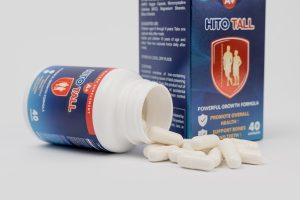
6. Hito Tall – Nutritional solution supporting height development for children prone to stress or slow growth
Besides proper diet, exercise, and sleep, supplementing with products that support bones and cartilage is essential for children showing prolonged stress or slow height gain.
Hito Tall is a trusted choice among parents due to its scientifically combined key nutrients.
6.1 Key ingredients in Hito Tall
– Nano Calcium: superior absorption, non-heating
– Vitamin D3: enhances calcium absorption
– Vitamin K2 (MK7): directs calcium to the correct bone locations
– Collagen Type II: nourishes growth cartilage to help bones elongate
– Magnesium, Zinc, Lysine: boost immunity, improve sleep, reduce stress
– Supporting micronutrients: strengthen bone tissue
6.2 Benefits for children under stress or with slow height growth
– Stabilizes the nervous system and improves sleep
– Supports stronger natural GH secretion
– Increases bone density and nourishes growth cartilage
– Improves appetite and nutrient absorption
Many reports indicate that children using Hito Tall for 2–3 months, combined with early sleep and regular exercise, show noticeable height improvement.
7. How to know if a child’s height has “returned to track”?
Parents can assess based on:
– Monthly height growth rate
– WHO growth charts
– Improvements in sleep
– Increased appetite
– More relaxed, confident mindset
– Firmer muscles and straighter posture
If a child grows 0.8–1.5 cm per month during the development phase, it is a good sign.
8. Conclusion – Stress is a “silent enemy” of height, but it is fully controllable
So, does stress stunt growth? Yes, and its impact is stronger than many parents realize.
Prolonged stress can:
– Reduce GH hormone
– Disrupt sleep
– Cause poor appetite and lower nutrient absorption
– Weaken bones and cartilage
– Make children shorter than their true potential
The good news: with proper intervention, children can fully return to normal growth patterns, and even grow faster with appropriate nutrition and exercise.
Parents should help children:
– Sleep early
– Exercise daily
– Reduce academic pressure
– Eat a balanced diet
Supplement with Hito Tall to optimize bone and cartilage development. Height is not determined solely by genetics. A healthy psychological environment, combined with proper nutrition and support, can help children reach their best possible stature.
