
Blog
What Age Do Humans Stop Growing?
Th7
One of the most common questions about height is: “What age do humans stop growing?” The answer isn’t the same for everyone. Some people stop growing during their mid-teens, while others continue gaining height until their late teens or even early twenties. The timing depends on genetics, hormones, nutrition, and overall health.
In this guide, we’ll explain when height growth typically ends, why it happens, and what you can do to support healthy bones throughout your life.
How Does Height Growth Happen?
Height increases because the long bones in your body become longer over time. This process occurs in special areas near the ends of bones called growth plates (epiphyseal plates).
Growth plates are made of cartilage, which is softer than bone. During childhood and adolescence, new cartilage cells are constantly produced. These cells gradually harden into bone, allowing the skeleton to lengthen. As long as the growth plates remain open, height can continue to increase. Once they close, natural height growth comes to an end.
At What Age Do Girls Stop Growing?
Girls generally begin puberty earlier than boys, which means they also finish growing sooner.
Typical growth milestones include:
- Growth spurt begins around ages 8–13
- Fastest growth usually occurs between ages 10–14
- Most girls reach their adult height by ages 14–16
After growth plates close, additional increases in bone length are no longer possible.
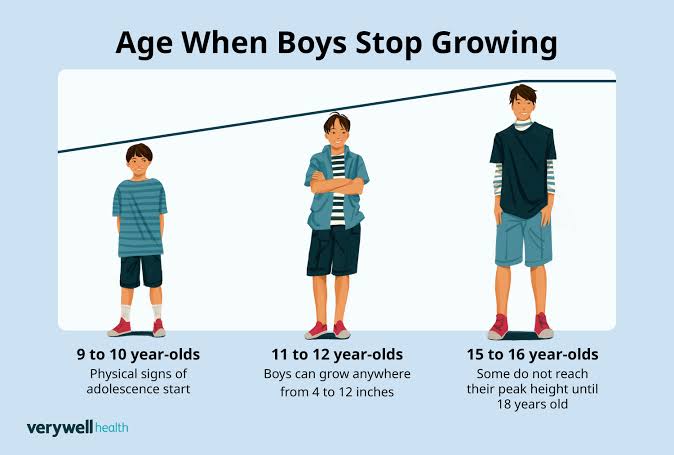
At What Age Do Boys Stop Growing?
Boys usually experience puberty later than girls.
Typical milestones include:
- Growth spurt begins around ages 10–15
- Rapid height gain often occurs between ages 12–16
- Most boys stop growing between ages 16–18
Some males continue to gain small amounts of height into their early twenties, although this is less common.
Why Do People Stop Growing?
The main reason is the closure of growth plates.
During puberty, the body produces higher levels of sex hormones such as:
- Estrogen
- Testosterone
These hormones initially trigger rapid growth but eventually cause the growth plates to mature and fuse. Once fused, bones cannot lengthen naturally anymore.
Read more: How Does Height Growth Actually Work?
Can Some People Grow After Age 18?
Yes—but only under certain circumstances.
Growth after age 18 is possible if the growth plates have not fully closed.
This varies from person to person.
Factors that influence growth plate closure include:
- Genetics
- Puberty timing
- Hormone levels
- Overall health
However, by the early twenties, growth plates are typically fully fused in healthy adults.
Can Adults Grow Taller After Growth Plates Close?
This is one of the biggest misconceptions online.
The scientific answer is:
No.
Once growth plates have closed, adults cannot naturally increase the length of their bones.
No exercise, stretching routine, or dietary supplement has been proven to reopen closed growth plates.
Why Do Some Adults Appear Taller?
Several factors can temporarily improve height appearance.
Better Posture
Slouching can make you appear several centimeters shorter.
Improving posture through strengthening and stretching exercises helps you stand at your natural height.
Spinal Decompression
The discs between your vertebrae absorb fluid overnight.
As a result, most people are slightly taller in the morning than in the evening.
This effect is temporary and does not represent permanent growth.
Improved Fitness
Stronger core muscles, better flexibility, and healthy body composition often create the appearance of increased height.
Factors That Affect Final Adult Height
Your final height is influenced by several important factors.
Genetics
Genes account for most of your height potential.
Children often inherit height characteristics from both parents.
However, genetics do not tell the entire story.
Nutrition
Proper nutrition during childhood and adolescence supports healthy growth.
Key nutrients include:
- Calcium
- Vitamin D
- Protein
- Magnesium
- Phosphorus
- Vitamin K2
A balanced diet helps children reach their full genetic potential.
Sleep
Growth hormone is released primarily during deep sleep.
Children and teenagers who consistently get enough sleep support normal growth and development.
Physical Activity
Regular exercise promotes healthy bones, muscles, and posture.
Activities such as running, jumping, and strength training help stimulate bone development during growth years.
Overall Health
Chronic illnesses, hormonal disorders, and severe nutritional deficiencies may delay or limit normal growth.
Signs That Growth May Be Ending
Several signs often indicate that height growth is slowing down.
These include:
- Slower annual height increases
- Completion of puberty
- Increased muscle development
- Growth plate fusion confirmed by X-ray
Healthcare professionals may use imaging tests to determine whether growth plates remain open.
Does Calcium Help You Grow Taller?
Calcium plays an essential role in healthy bone development.
During childhood and adolescence, it supports the formation of strong bones alongside other nutrients such as vitamin D and protein.
However, calcium alone cannot make someone taller if growth plates have already closed.
For adults, calcium remains important because it helps maintain:
- Bone density
- Bone strength
- Normal bone remodeling
- Overall skeletal health
Why Bone Health Still Matters After Growth Stops
Although adults no longer grow taller, bones remain living tissue.
Throughout life, bones continuously break down and rebuild through a process called bone remodeling.
Maintaining healthy bones becomes increasingly important after age 30 because bone mass gradually begins to decline.
Healthy habits can help reduce the risk of:
- Osteoporosis
- Bone fractures
- Height loss with aging
- Reduced mobility
Supporting Healthy Bones with Hito Calcium
Getting enough calcium every day isn’t always easy, especially for adults with busy lifestyles.
Hito Calcium is formulated to help support daily bone health by providing essential nutrients involved in maintaining normal bone structure. When paired with a nutritious diet, regular exercise, and adequate vitamin D, it can help support long-term skeletal wellness.
It’s important to remember that Hito Calcium is intended to support healthy bones and is not a product that permanently increases adult height.
Read more: Can Adults Still Grow Taller? The Truth Explained
Final Thoughts
Most people stop growing during their mid-to-late teenage years, although the exact timing varies based on genetics and puberty.
Girls generally reach their adult height earlier than boys, while some males may continue growing into their early twenties.
After growth plates close, natural height growth ends. From that point forward, maintaining strong bones through proper nutrition, physical activity, and healthy lifestyle habits becomes the best way to preserve your natural height and overall quality of life.
Frequently Asked Questions
At what age do humans usually stop growing?
Most girls stop growing between 14 and 16 years old, while most boys stop between 16 and 18 years old. Some individuals may continue growing slightly into their early twenties.
Can you grow taller after 18?
Some people may continue growing after 18 if their growth plates remain open. Once the growth plates close, natural height growth is no longer possible.
How do doctors know if growth plates are closed?
Doctors can evaluate growth plates using an X-ray, usually of the hand and wrist, to determine whether bone growth is complete.
Does calcium increase adult height?
No. Calcium does not increase adult height after growth plates have closed. It supports healthy bones and helps maintain bone density throughout adulthood.
Why do older adults lose height?
Height loss with age is often caused by spinal disc compression, reduced bone density, osteoporosis, and changes in posture. A healthy lifestyle and proper nutrition can help reduce this natural decline.
