
Blog
Can Stretching Make You Taller? What Science Really Says

Th9
If you have ever searched for natural ways to increase height, you have probably come across stretching exercises that promise to make you taller. Hanging from a bar, stretching your legs, doing yoga, touching your toes, or following a daily stretching routine are often promoted as simple ways to gain extra centimeters.
But can stretching actually make you taller? The answer depends on what we mean by “taller.”
Stretching can improve flexibility, posture, body alignment, and the way you carry yourself. These changes may make you appear taller and help you stand closer to your natural full height. However, stretching does not permanently lengthen the long bones of an adult whose growth plates have already closed.
For children and teenagers who are still growing, stretching can be part of a healthy and active lifestyle, but it should not be viewed as a method for forcing additional bone growth.
Understanding the difference between actual skeletal growth and postural improvement can help you avoid unrealistic height claims.
What Determines Your Height?
Human height is primarily determined by the growth of the skeleton, particularly the length of the long bones in the legs and spine. During childhood and adolescence, bones grow through specialized areas called growth plates.
Growth plates contain cartilage that allows bones to lengthen. As puberty progresses, these growth plates gradually mature and eventually close. Once growth plates have closed, the long bones can no longer lengthen naturally through exercise or stretching.
This is one of the most important facts to understand when evaluating claims about adult height. Stretching may change posture and flexibility, but it does not reopen closed growth plates.
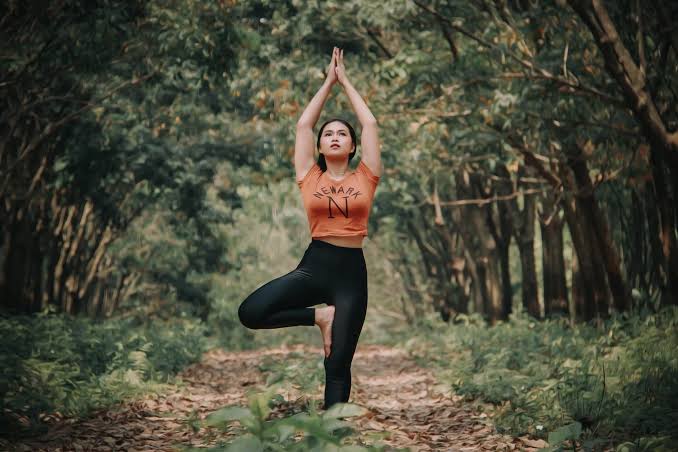
So, Can Stretching Make You Taller?
The short answer: not by permanently lengthening your bones.
Stretching cannot turn a 170 cm adult into a permanently 175 cm adult by lengthening the leg bones.
However, stretching can influence several factors related to how tall a person looks and how they stand.
For example, someone with tight muscles and poor posture may naturally stand with:
- Rounded shoulders
- Forward head position
- Bent hips
- Tight hamstrings
- Excessive spinal curvature
- A collapsed standing posture
Improving flexibility and posture may allow that person to stand more upright.
The measuring tape may therefore show a difference under certain circumstances, but this should not be confused with new bone growth.
Read more: Habits That Can Interfere With Healthy Growth and Bone Development
Stretching vs. Bone Growth
It is useful to separate these two concepts.
Bone growth
Bone growth involves biological processes occurring at the growth plates during childhood and adolescence.
It is influenced by factors such as:
- Genetics
- Hormones
- Nutrition
- Overall health
- Puberty
- Growth plate activity
Stretching
Stretching primarily affects:
- Flexibility
- Muscle length and tolerance
- Joint mobility
- Movement quality
- Posture
- Physical comfort
Stretching does not directly stimulate the long bones to become permanently longer after growth plate closure.
This distinction is particularly important for adults looking for natural height-increasing methods.
Why Do Some People Feel Taller After Stretching?
There are several possible explanations.
1. Improved posture
One of the most noticeable effects of a regular mobility routine can be better posture.
If your shoulders naturally fall forward, your head moves forward, or your spine is not comfortably aligned, you may not be standing at your full natural height.
Stretching combined with strengthening exercises can help improve body alignment.
When you stand more upright, you may look taller even though your skeleton has not changed in length.
2. Temporary changes in spinal compression
Your spine consists of individual vertebrae separated by discs.
Throughout the day, the spine experiences mechanical loading from standing, walking, sitting, and other activities.
This contributes to small changes in spinal height during the day.
After lying down and sleeping, the discs can rehydrate and recover from daily loading. This is one reason people can measure slightly taller in the morning than later in the day.
Stretching and lying positions may temporarily influence how the body feels and how the spine is positioned.
However, these changes are not equivalent to permanent skeletal growth.
3. Better body awareness
People who regularly stretch often become more aware of their posture.
They may naturally begin to:
- Keep their head more upright
- Pull their shoulders back
- Engage their core
- Stand more evenly
- Avoid slouching
These improvements can make a meaningful visual difference.
Can Hanging From a Bar Increase Height?
Hanging exercises are frequently marketed as a way to become taller.
When you hang from a bar, your body is placed under traction.
This may temporarily reduce the feeling of compression in the spine and can provide a useful stretching sensation.
However, hanging does not permanently lengthen adult bones.
It can still be a useful exercise for grip strength, shoulder mobility, and general physical conditioning when performed safely.
The key is to understand what the exercise can realistically do.
Hanging can support mobility and posture. It cannot permanently extend closed growth plates.
Can Yoga Make You Taller?
Yoga includes many movements that involve stretching, balance, flexibility, and body awareness.
Certain yoga poses may encourage better posture by strengthening the core and back while improving flexibility.
Examples include:
- Cobra pose
- Cat-Cow
- Child’s pose
- Downward-Facing Dog
- Mountain Pose
- Bridge Pose
These exercises may help someone stand more comfortably upright.
But yoga does not permanently increase the length of adult bones.
If someone appears taller after improving their yoga practice, the change may be related to posture, alignment, body composition, or the way they carry themselves rather than new skeletal growth.
Can Stretching Help Teenagers Grow?
For teenagers who are still growing, stretching can be a healthy part of physical activity.
However, it is important to understand its role.
Stretching does not force the growth plates to produce additional bone length.
Instead, it can contribute to:
- Flexibility
- Mobility
- Coordination
- Athletic performance
- Posture
- Injury prevention when incorporated appropriately
- Overall physical fitness
A teenager’s final height is influenced by many biological factors, and no stretching routine can guarantee a specific number of centimeters.
The best approach is to support healthy development through adequate nutrition, sleep, physical activity, and overall health.
Read more: Does Protein Help You Grow Taller? The Connection Between Protein and Height
The Role of Posture in Looking Taller
Posture is one of the most overlooked factors when people talk about height.
Imagine two people with exactly the same skeletal height.
Person A stands with:
- Forward head
- Rounded shoulders
- Slouched upper back
- Bent knees
Person B stands with:
- Head naturally aligned
- Shoulders relaxed
- Chest comfortably open
- Spine in a neutral position
- Weight distributed evenly
They may have the same actual height, but Person B can appear taller and more confident.
This is why posture-focused exercise can be valuable even when actual bone growth is no longer possible.
Stretching Alone Is Not Enough for Good Posture
Another common misconception is that stretching every tight muscle will automatically fix posture.
Not necessarily.
Posture is influenced by both flexibility and strength.
For example, someone may have tight chest muscles and weak upper-back muscles. Simply stretching the chest may not provide a lasting improvement if the muscles responsible for maintaining an upright position remain weak.
A balanced routine may include:
Mobility + stretching + strength + body awareness
For example:
- Chest stretching
- Thoracic mobility exercises
- Upper-back strengthening
- Core exercises
- Hip mobility
- Glute strengthening
This combination can be more useful for posture than stretching alone.
Best Stretching Exercises for a Taller-Looking Posture
If your goal is to improve flexibility and stand more upright, consider exercises such as:
1. Chest Opener
This can help counteract the rounded-shoulder position associated with prolonged sitting.
2. Cat-Cow Stretch
This gentle movement encourages spinal mobility and body awareness.
3. Hip Flexor Stretch
Tight hip flexors may contribute to an uncomfortable standing posture in some people.
4. Hamstring Stretch
Improving hamstring flexibility can make certain movements more comfortable.
5. Thoracic Extension
Mobility through the upper and middle back can support a more upright posture.
6. Child’s Pose
This gentle position can provide a comfortable stretch through the back and hips.
7. Standing Alignment Practice
Simply practicing standing tall with your head, shoulders, pelvis, and feet naturally aligned can help develop better posture awareness.
None of these exercises permanently lengthens your bones. Their purpose is to help your body move and position itself more effectively.
Can Stretching Increase Height in the Morning?
You may notice that you are slightly taller in the morning than at night.
This is normal.
While you sleep horizontally, the spine is not exposed to the same prolonged gravitational loading that occurs throughout the day.
The spinal discs can recover some fluid, resulting in a small temporary difference in measured height.
As the day progresses, normal loading causes height to decrease slightly.
Stretching after waking may make you feel more mobile and upright, but it is not responsible for permanent height gain.
The morning-to-evening difference should therefore not be interpreted as evidence that stretching is growing your bones.
What About “Height Increasing” Stretching Programs?
Some online programs advertise dramatic height gains from stretching routines.
These claims should be approached carefully.
Before purchasing a program, ask:
- Does it provide scientific evidence?
- Does it distinguish adults from growing teenagers?
- Does it explain growth plates?
- Does it promise permanent bone lengthening?
- Are the claimed results independently measured?
- Does it rely mainly on before-and-after photographs?
- Does it make unusually large promises in a short period?
A photo showing someone standing straighter after a stretching program does not prove that their bones became longer.
Similarly, a small change in height measurement may reflect posture, measurement technique, time of day, or spinal compression.
Stretching and Adult Height: What Is Realistic?
For adults, the realistic benefits of stretching are related mainly to mobility and posture.
A consistent stretching routine may help you:
- Move more comfortably
- Maintain flexibility
- Improve posture
- Reduce stiffness
- Support physical activity
- Develop better body awareness
These are meaningful benefits.
You simply should not confuse them with permanent skeletal growth.
If your goal is to look taller, improving posture may be more realistic than trying to physically lengthen your bones.
Can Nutrition Make Stretching More Effective?
Stretching and nutrition serve different purposes.
Stretching helps with flexibility and movement.
Nutrition provides the raw materials and energy needed for normal physiological processes.
For children and teenagers, a balanced diet containing adequate protein, calcium, vitamin D, magnesium, and other essential nutrients supports normal growth and bone development.
For adults, adequate nutrition remains important for maintaining bone and muscle health.
This is why a comprehensive approach is more sensible than focusing on a single exercise.
A healthy lifestyle may include:
- Balanced nutrition
- Adequate calcium intake
- Appropriate vitamin D
- Sufficient protein
- Regular physical activity
- Strength training
- Flexibility work
- Adequate sleep
- Healthy body weight
Where Does Hito Calcium Fit In?
Hito Calcium can be considered as part of a broader nutritional routine for people who need help meeting their calcium intake.
Calcium is an important mineral for maintaining normal bones and supporting skeletal health.
However, calcium should not be viewed as a replacement for stretching, exercise, sleep, or a balanced diet.
Likewise, stretching should not be marketed as a replacement for adequate nutrition.
Each plays a different role:
| Habit | Main Role |
|---|---|
| Stretching | Flexibility and mobility |
| Strength training | Muscle and functional strength |
| Calcium | Supports normal bone health |
| Vitamin D | Helps support calcium absorption and bone health |
| Protein | Supports muscles and body tissues |
| Sleep | Recovery and healthy development |
| Good posture | Helps you stand at your natural full height |
The goal is not to find one magical solution. It is to create a lifestyle that supports the body as a whole.
What If You Want to Look Taller?
If your main goal is appearance rather than actual skeletal growth, several strategies can make a noticeable difference.
Improve posture
Stand naturally upright without excessively arching your back.
Strengthen your core
A stronger core can help support stable posture.
Train your upper back
Strong upper-back muscles can help counter excessive shoulder rounding.
Improve flexibility
Work on areas that feel restricted, particularly the hips, chest, hamstrings, and upper back.
Choose well-fitting clothing
Clothing proportions can also influence visual perception of height.
Maintain a healthy body composition
Overall body proportions can affect how tall or compact someone appears.
These strategies are fundamentally different from trying to lengthen bones.
When Should You Talk to a Doctor About Growth?
If a child or teenager appears to be growing significantly more slowly than expected, the issue should not be addressed simply by adding stretching exercises.
Growth is influenced by many factors, and unusually slow growth can sometimes be associated with nutritional problems, hormonal conditions, chronic illness, or other medical factors.
A healthcare professional can assess:
- Growth history
- Height and weight patterns
- Pubertal development
- Family growth patterns
- Nutrition
- General health
- Potential medical causes
Early evaluation can be useful when growth appears significantly different from an individual’s expected pattern.
Final Thoughts
So, can stretching make you taller?
Stretching can help you stand taller, but it does not permanently lengthen adult bones.
For children and teenagers who are still growing, stretching can be a valuable part of an active lifestyle, but it cannot guarantee additional height.
For adults, the realistic benefits are improved flexibility, mobility, posture, and body alignment.
Instead of chasing dramatic promises about gaining several centimeters through stretching alone, focus on what stretching can genuinely provide.
Combine mobility work with strength training, balanced nutrition, adequate calcium and vitamin D, sufficient sleep, and good posture.
That approach supports your body’s overall health while keeping expectations realistic.
Frequently Asked Questions
1. Can stretching increase height permanently?
Stretching does not permanently lengthen the long bones of adults after growth plates have closed. It may improve posture and help you stand at your natural full height.
2. Does hanging make you taller?
Hanging may temporarily relieve the sensation of spinal compression and improve mobility, but it does not permanently increase adult bone length.
3. Can yoga increase height?
Yoga can improve flexibility, posture, balance, and body awareness. It does not permanently lengthen adult bones.
4. How long should I stretch every day?
The appropriate amount depends on your goals, fitness level, and the types of stretches you perform. Consistency is generally more useful than extremely long stretching sessions.
5. Can stretching make teenagers taller?
Stretching can support flexibility and physical fitness during adolescence, but it does not force additional bone growth or guarantee a taller final height.
6. Why do I feel taller after stretching?
You may feel taller because stretching can reduce stiffness, improve posture, and help you stand more upright. This does not necessarily mean your bones have become longer.
7. Can stretching increase height after age 20?
For most adults whose growth plates have closed, stretching cannot permanently increase skeletal height. It can, however, support posture and mobility.
8. Should I take calcium while doing stretching exercises?
Calcium is important for normal bone health. Whether supplementation is appropriate depends on your overall diet and individual nutritional needs. A supplement should complement, not replace, a balanced diet.
