
Blog
Magnesium for Stronger Bones: Why This Mineral Matters
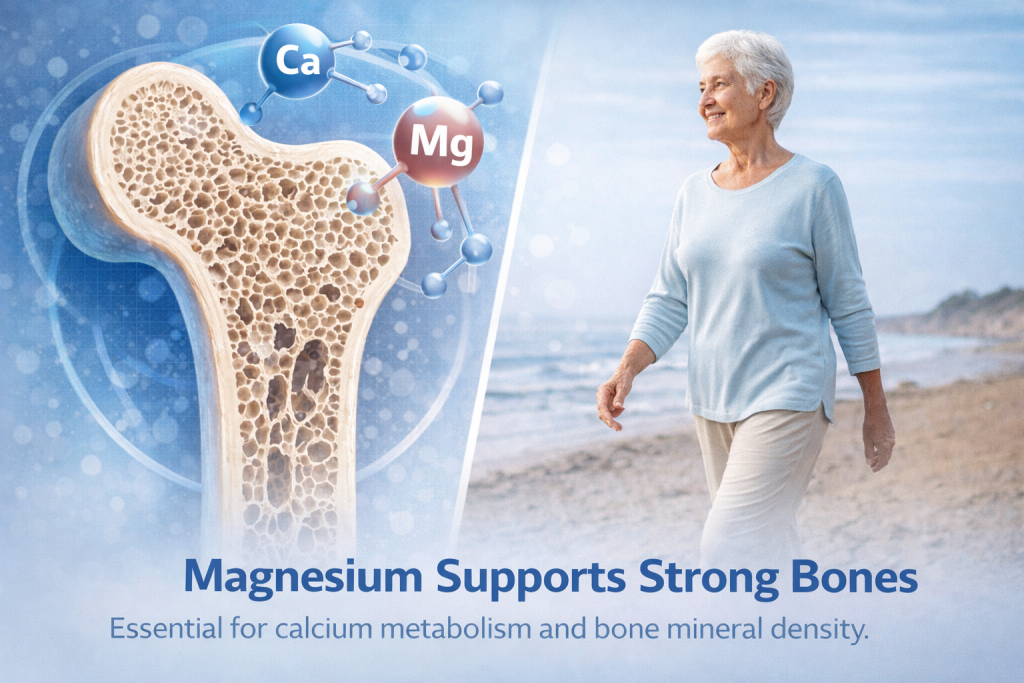
Th8
When people talk about healthy bones, calcium and vitamin D usually receive most of the attention. But there is another mineral that deserves a place in the conversation: magnesium.
Magnesium is an essential mineral involved in hundreds of processes throughout the body. It contributes to normal muscle and nerve function, energy metabolism, protein synthesis, and the maintenance of normal bones.
Although magnesium does not receive as much attention as calcium, it works as part of a broader nutritional system that supports skeletal health.
So how does magnesium contribute to stronger bones? How does it interact with calcium and vitamin D? And how can adults get enough magnesium through their diet?
Let’s explore.
What Is Magnesium?
Magnesium is an essential mineral that the body needs but cannot produce on its own.
It is naturally present in many foods and is also available through dietary supplements.
Magnesium contributes to numerous biological functions, including:
- Normal muscle function
- Normal nerve function
- Energy metabolism
- Protein synthesis
- Electrolyte balance
- Maintenance of normal bones
- Normal psychological function
Because magnesium participates in so many processes, maintaining an adequate intake is important for overall health.
Why Is Magnesium Important for Bones?
Magnesium is involved in bone formation and mineral metabolism.
A significant portion of the body’s magnesium is stored in bone tissue.
It contributes to the structure of bone and participates in processes that regulate calcium and vitamin D metabolism.
However, magnesium should not be thought of as a replacement for calcium.
Instead:
Calcium provides a major mineral component of bone, while magnesium supports several biological processes involved in bone health.
A balanced intake of both is important.

Magnesium and Bone Mineralization
Bone is made from a combination of organic material and minerals.
Calcium and phosphorus form much of the mineral component that gives bones their hardness.
Magnesium is present in bone tissue and contributes to normal bone structure and mineral metabolism.
Adequate magnesium intake is therefore part of a balanced nutritional approach to maintaining healthy bones.
How Does Magnesium Work with Calcium?
Calcium and magnesium are both essential minerals, but they have different functions.
Calcium plays a major role in:
- Bone structure
- Muscle contraction
- Nerve signaling
- Blood clotting
Magnesium contributes to:
- Muscle relaxation and normal muscle function
- Energy production
- Protein synthesis
- Electrolyte balance
- Normal bone maintenance
They work within different biological pathways rather than simply competing with each other.
This is why a balanced diet should provide adequate amounts of both minerals.
Magnesium and Vitamin D
Vitamin D is essential for normal calcium absorption and metabolism.
Magnesium is involved in enzymatic reactions related to vitamin D metabolism.
This means magnesium, vitamin D, and calcium are connected through several biological processes.
A simplified way to think about the relationship is:
Magnesium → supports vitamin D metabolism
Vitamin D → helps regulate calcium absorption
Calcium → provides an essential mineral component of bone
Healthy bone metabolism depends on this broader nutritional network rather than one isolated nutrient.
Does Magnesium Help You Grow Taller?
This is an important question for people interested in adult height.
Magnesium contributes to normal bone health and overall nutrition, but it does not make adults taller after growth plates have closed.
During childhood and adolescence, adequate magnesium intake contributes to normal nutritional status and skeletal development.
However, final height is influenced primarily by genetics, hormones, nutrition, health, and other developmental factors.
No mineral can override genetic potential.
Read more: The Role of Vitamin K2 in Bone Health: Why It Matters
Magnesium and Adult Bone Health
Although adults stop gaining skeletal height after growth plates close, bones remain living tissue.
Throughout adulthood, bones constantly undergo remodeling.
Old bone tissue is removed and new bone is formed.
This process continues throughout life.
Magnesium contributes to normal bone maintenance and mineral metabolism, making adequate intake relevant even after height growth has ended.
Why Bone Health Matters as You Age
Bone mass typically reaches its peak during early adulthood.
After peak bone mass is reached, the balance between bone formation and breakdown gradually changes with age.
Several factors can affect bone health, including:
- Age
- Hormonal changes
- Physical inactivity
- Poor nutrition
- Low calcium intake
- Low vitamin D status
- Low protein intake
- Smoking
- Excessive alcohol consumption
A nutrient-rich diet and active lifestyle can help support healthy bones throughout adulthood.
Best Food Sources of Magnesium
One of the easiest ways to increase magnesium intake is to include a variety of whole foods in your diet.
Nuts
Almonds, cashews, and other nuts can provide significant amounts of magnesium.
Seeds
Pumpkin seeds, chia seeds, and flaxseeds are nutrient-dense sources.
Whole Grains
Brown rice, oats, whole-wheat products, and other whole grains contain magnesium.
Legumes
Beans, lentils, and chickpeas are good sources of magnesium and also provide protein and fiber.
Leafy Green Vegetables
Spinach and other dark leafy greens provide magnesium along with many other micronutrients.
Dark Chocolate
Dark chocolate with a high cocoa content can contribute magnesium, although portion size matters because it is also relatively high in calories.
How Much Magnesium Do Adults Need?
Recommended magnesium intake varies by age and sex.
For many adults, daily requirements are approximately:
- Men: 400–420 mg
- Women: 310–320 mg
Requirements can be higher during pregnancy.
These figures refer to total magnesium intake from food and supplements.
Most healthy people can obtain adequate magnesium through a varied diet.
Signs of Inadequate Magnesium Intake
Mild magnesium inadequacy may not always produce obvious symptoms.
Severe deficiency is uncommon in otherwise healthy people but can occur in certain circumstances.
Risk may increase with:
- Certain gastrointestinal disorders
- Long-term use of some medications
- Excessive alcohol consumption
- Certain medical conditions
- Very poor dietary intake
Possible symptoms of significant deficiency can include muscle weakness, tremors, abnormal heart rhythms, or other serious problems.
If you suspect magnesium deficiency, professional medical evaluation is more appropriate than simply taking high-dose supplements.
Magnesium Supplements: Are They Necessary?
Not everyone needs a magnesium supplement.
A balanced diet is generally the preferred way to obtain magnesium.
However, supplements may be useful for people whose diets do not provide enough magnesium or who have increased nutritional needs.
Different forms of magnesium supplements are available, including:
- Magnesium citrate
- Magnesium glycinate
- Magnesium oxide
- Magnesium chloride
These forms differ in absorption, tolerability, and elemental magnesium content.
If you are considering supplementation, choosing the appropriate form and amount is important.
Read more: Vitamin D3 and Calcium: Why Do They Work Better Together?
Magnesium and Exercise
Magnesium is particularly relevant to active adults because it contributes to normal muscle function and energy metabolism.
Regular exercise is also important for maintaining strong bones.
Weight-bearing activities such as:
- Walking
- Hiking
- Jogging
- Dancing
- Resistance training
place mechanical stress on bones and support healthy skeletal adaptation.
Combining physical activity with adequate magnesium, calcium, vitamin D, protein, and other nutrients provides a comprehensive approach to bone health.
Magnesium and Calcium: Should You Take Them Together?
There is no universal rule that everyone needs to take magnesium and calcium at exactly the same time.
The most important factor is ensuring adequate overall intake.
A balanced diet usually provides both minerals.
If you take supplements, the appropriate timing and dosage depend on the specific products and your individual needs.
People taking medications should also consider potential interactions and consult a healthcare professional when necessary.
Magnesium, Calcium, Vitamin D3, and K2
Modern bone-health formulas may combine several nutrients because bone metabolism is complex.
A formula may contain:
Calcium — contributes to normal bone structure.
Vitamin D3 — supports calcium absorption and normal calcium metabolism.
Vitamin K2 — contributes to normal vitamin K-dependent protein activation involved in bone metabolism.
Magnesium — contributes to normal bone maintenance and mineral metabolism.
Each nutrient has its own role.
Combining nutrients does not mean that higher doses are automatically better. The goal is a balanced and appropriate nutritional intake.
Supporting Bone Health with Hito Calcium
For adults looking for a convenient way to support their daily bone-health routine, Hito Calcium can be incorporated into a broader nutritional strategy.
A calcium-focused supplement may help adults who have difficulty obtaining enough calcium through their regular diet.
Depending on the specific formulation, complementary nutrients such as vitamin D3, K2, and magnesium can further support a comprehensive approach to skeletal nutrition.
Hito Calcium should be viewed as a bone-health supplement, not as a product that can reopen growth plates or permanently increase adult height.
How to Support Strong Bones Every Day
Good bone health starts with consistent habits.
Eat a varied diet
Include calcium-rich foods, vegetables, fruits, whole grains, legumes, nuts, seeds, and quality protein sources.
Stay physically active
Combine weight-bearing exercise with resistance training.
Get enough calcium
Pay attention to your daily dietary intake and consider supplementation when appropriate.
Maintain adequate vitamin D
Diet, appropriate sunlight exposure, and supplementation when needed can all contribute to vitamin D intake.
Get enough magnesium
Include nuts, seeds, whole grains, legumes, and leafy green vegetables.
Prioritize protein
Protein supports both muscle and bone health.
Avoid unhealthy habits
Smoking and excessive alcohol consumption can negatively affect overall bone health.
Common Myths About Magnesium
Myth 1: Magnesium Alone Makes Bones Strong
Magnesium is important, but strong bones require multiple nutrients and healthy lifestyle habits.
Myth 2: Magnesium Can Make Adults Taller
No. Magnesium cannot increase bone length after growth plates have closed.
Myth 3: Everyone Needs a Magnesium Supplement
Not necessarily. Many people can meet their magnesium needs through food.
Myth 4: More Magnesium Is Always Better
Excessive supplemental magnesium can cause side effects, particularly digestive problems. The appropriate amount depends on the individual and the source of magnesium.
Final Thoughts
Magnesium is an often-overlooked mineral that contributes to normal bone health, mineral metabolism, muscle function, and many other processes throughout the body.
It works alongside calcium, vitamin D, protein, vitamin K, and other nutrients rather than acting alone.
For growing children and teenagers, adequate magnesium is part of a healthy nutritional foundation. For adults, it remains relevant because bones continue to remodel throughout life.
However, magnesium cannot make adults taller once growth plates have closed.
The best approach is to focus on complete bone health: eat a nutrient-rich diet, stay active, get enough calcium and vitamin D, maintain adequate protein and magnesium intake, and use supplements thoughtfully when needed.
Strong bones are built through consistent habits—not a single nutrient or miracle solution.
Frequently Asked Questions
Is magnesium good for bone health?
Yes. Magnesium contributes to normal bone maintenance and participates in mineral metabolism and other processes relevant to skeletal health.
Does magnesium help with height growth?
Magnesium contributes to normal nutrition and bone health during growth, but it cannot increase height beyond genetic potential or make adults taller after growth plates close.
Do calcium and magnesium work together?
Yes. Both are essential minerals involved in different biological processes related to bone, muscle, and overall health.
How much magnesium do adults need?
Most adult men need around 400–420 mg per day, while adult women generally need around 310–320 mg per day from all sources, although individual needs vary.
What foods are high in magnesium?
Nuts, seeds, whole grains, legumes, dark leafy greens, and certain other whole foods are good sources of magnesium.
Can magnesium replace calcium?
No. Magnesium and calcium have different functions and should not be considered substitutes for one another.
Is magnesium important after age 30?
Yes. Bones continue to remodel throughout adulthood, so maintaining adequate intake of magnesium, calcium, vitamin D, protein, and other nutrients remains important for long-term skeletal health.
